
Executive Summary
Mit dem neuen 12K-RGBW-Sensor setzt Blackmagic Design neue Maßstäbe in der digitalen Kinematografie. Die Kameras PYXIS 12K und URSA Cine 12K bieten 12K-Auflösung, 16 Blendenstufen Dynamikumfang und außergewöhnliche Farbwiedergabe – ermöglicht durch eine innovative Sensorarchitektur jenseits des Bayer-Musters.
In Kombination mit Blackmagic RAW und DaVinci Resolve Studio entsteht ein leistungsstarkes Postproduktions-Ökosystem. Ob mobil oder voll ausgestattet: Blackmagic macht High-End-Workflows flexibler und zugänglicher denn je.
Redefining the Digital Negative: The Architecture of the 12K RGBW Sensor
The 12K RGBW technology marks a significant break from previous standards and overcomes the physical limitations of conventional high-resolution sensors.
Beyond Bayer: A Fundamental Shift in Sensor Design
For decades, the industry standard for camera sensors has been based on the Bayer pattern. However, Blackmagic Design employs an entirely new 6×6 grid architecture.
This sensor features equal numbers of red, green, and blue pixels, along with 18 white photosites that enhance light sensitivity. This symmetrical design ensures exceptionally rich color reproduction and improved color supersampling – a targeted solution to the challenges of traditional sensors.
The Science of Light: Achieving 16 Stops of Dynamic Range
The sensor offers a dynamic range of 16 stops. The “W” pixels without color filters capture more light, thereby increasing light sensitivity.
Smaller pixels at 12K typically capture less light, which reduces dynamic range. Blackmagic compensates for this by using half of the pixels solely for luminance measurement. This results in low-noise, detail-rich images even under challenging lighting conditions. The camera is optimized for a native ISO of 800 and does not require a dual-native ISO system.
More Than Just Pixels: The Power of In-Sensor Scaling
Blackmagic cameras allow recording in 12K, 8K, or 4K — across the entire full-frame sensor, with no cropping. Thanks to the 6×6 grid, true pixel binning is used to produce razor-sharp native images even at lower resolutions.
Unlike many other cameras, Blackmagic maintains a consistent field of view — regardless of resolution. A 50mm lens remains a 50mm, no matter the frame rate or resolution. This simplifies on-set workflows, saves time, and preserves creative control.
Resolution choice thus becomes a technical decision — such as 12K for VFX plates or 8K for high-speed capture — without compromising image composition.
Two Bodies for a New Era: Choosing the Right 12K Camera
The revolutionary 12K RGBW sensor is available in two different camera bodies, each designed for specific production requirements and environments. The choice between the PYXIS 12K and the URSA Cine 12K is a strategic decision based on the priorities of the respective project.
The PYXIS 12K: Ultimate Versatility in a Compact Form
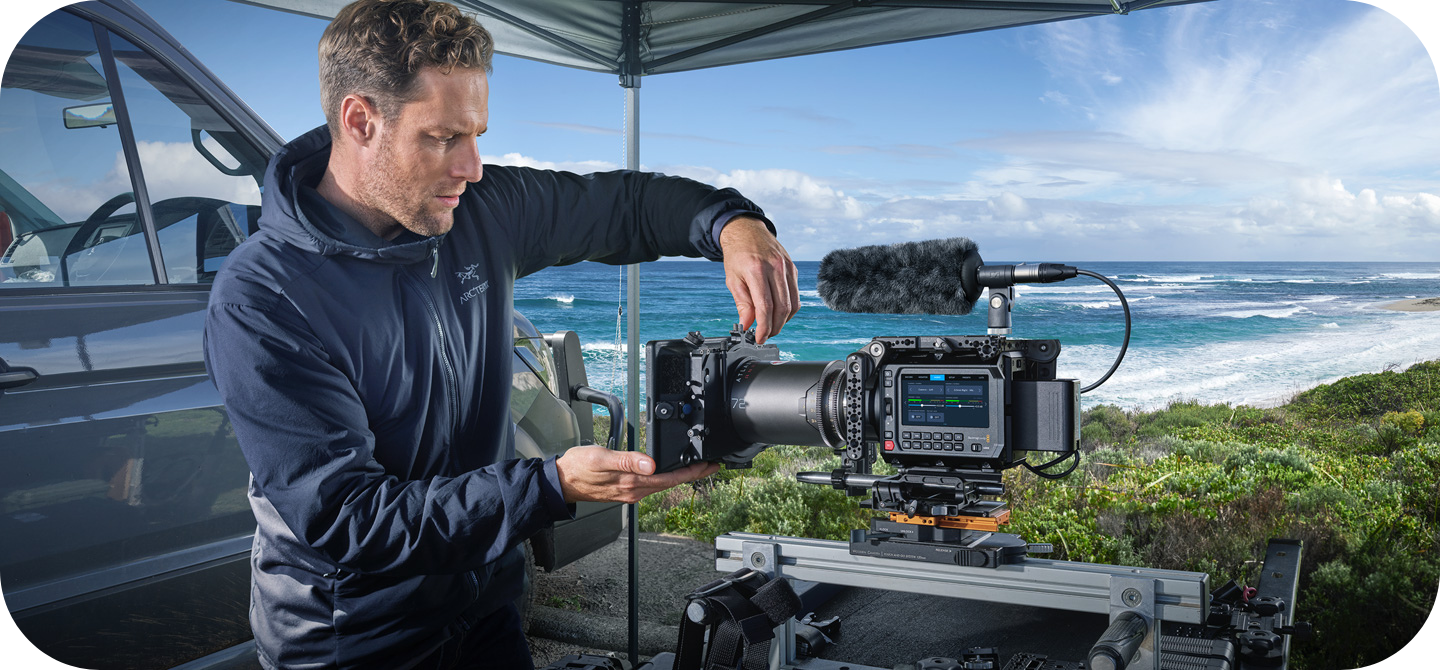
The Blackmagic PYXIS 12K is a compact, modular box camera made from rugged aluminum alloy. Weighing only 1.6 kg, it is ideal for use on gimbals, drones, and cranes – perfect for flexible, mobile productions.
As a B-camera to the URSA Cine or a standalone A-camera for smaller teams, it offers impressive performance. Features include EF, PL, or L mounts, dual CFexpress slots, 10G Ethernet for cloud connectivity, and an integrated 4" HDR touchscreen.
The URSA Cine 12K: The Uncompromising Tool for High-End Productions
The Blackmagic URSA Cine 12K is specifically designed for professional cinema, series, and commercial productions. Weighing approximately 3.7 kg and featuring a robust, integrated body, it delivers top performance and flexibility on set.
Equipped with the same 12K RGBW sensor as the PYXIS, the URSA Cine offers significantly higher frame rates (e.g., up to 224 fps in 8K) and faster readout speeds thanks to efficient heat management, minimizing rolling shutter effects.
Highlights include built-in ND filters (2, 4, 6 stops), dual monitoring options for operator and focus puller, professional connectors (Lemo, Fischer, 12G-SDI), an integrated touchscreen, and a swappable 8 TB flash module. Additionally, it is officially Netflix-approved for Originals.
Comparison at a Glance and the Performance Delta
Both the PYXIS 12K and the URSA Cine 12K use the same innovative 12K RGBW sensor, delivering identical image quality. However, there are clear differences in performance and body design.
The URSA Cine 12K features a larger body with efficient heat management. This allows for higher frame rates — such as 224 fps in 8K compared to 112 fps on the PYXIS. The sensor readout is also significantly faster (12 ms vs. 24 ms), minimizing rolling shutter effects during fast movements.
The PYXIS 12K, on the other hand, is extremely compact and weighs only about 1.6 kg. It is ideal for use on gimbals, drones, or as a mobile secondary camera. The trade-off is slightly reduced performance, which is acceptable in many productions.
Table 1: PYXIS 12K vs. URSA Cine 12K Side-by-Side Comparison
| Feature | PYXIS 12K | URSA Cine 12K |
|---|---|---|
| Form Factor | Compact, modular box camera | Large, integrated studio body |
| MSRP | € 5,495 | € 14,995 (Kit) / € 6,995 (Body) |
| Built-in ND Filters | No | Yes (2, 4, 6 stops) |
| Key I/O | 1× 12G-SDI, 1× Mini-XLR, 10G Ethernet | 2× 12G-SDI, 2× XLR, Lemo, Fischer |
| Storage Media | 2× CFexpress Type B, USB-C | 1× Blackmagic Media Module (8 TB included) |
| Max Frame Rate (8K 2.4:1) | 112 fps | 224 fps |
| Sensor Readout (12K OG) | 24.12 ms | 12.06 ms |
| Target Production | Indie film, gimbal/drone, B-camera | Feature film, series, high-end commercials |
*Specifications may vary depending on firmware version.
The Power of Oversampling: Future-Proofing and Creative Reframing
Oversampling means recording in 12K and delivering in 8K or 4K – this is the core advantage.
Superior Image Quality: A 4K image downscaled from 12K is sharper and more detailed, with richer color information and fewer aliasing artifacts.
Creative Freedom: The high resolution allows for post-production reframing. A 12K shot can be split into different framing compositions for 4K timelines without any loss of quality – essentially a multi-camera production with just one camera.
Stabilization: The extra resolution enables effective image stabilization, turning shaky handheld footage into smooth, gimbal-like shots without loss of sharpness.
A New Benchmark for VFX and Compositing
The “incredible definition around objects” that 12K resolution offers is ideal for working with visual effects (VFX).
Greenscreen & Keying: More pixels around the edges of a subject give keying software more data. The result is cleaner and more precise mattes, preserving fine details like hair.
Tracking: The high resolution provides more distinct points for tracking algorithms to lock onto, resulting in more accurate motion tracking for seamless integration of CGI elements into live-action footage.
Plates & Elements: Capturing background plates or VFX elements like explosions, dust, or fog in 12K gives compositing artists maximum flexibility to scale and reposition these elements within a scene without losing detail.
The Seamless Ecosystem: Sensor, BRAW, and DaVinci Resolve
The 12K workflow works through the close integration of hardware and software. Conventional codecs create files that are too large and require a lot of processing power.
Blackmagic RAW (BRAW) was specifically developed for the sensor. With efficient compression and in-camera demosaicing, 12-bit RAW files are manageable and can even be edited on laptops.
DaVinci Resolve Studio is perfectly optimized for BRAW and enables smooth real-time editing of 12K footage without proxy files. This integrated system is the key to the practical relevance of the 12K camera.
Die Kunst der Farbe: Generation 5 Color Science
Generation 5 Color Science ist die fortschrittliche Bildverarbeitungs-Pipeline, die die enormen Farbdaten des 12K-RGBW-Sensors präzise interpretiert. Sie liefert natürliche und präzise Hauttöne, kräftige, aber dennoch realistische Farbwiedergabe – selbst bei stark gesättigten Tönen wie Neonlicht – und einen weichen, filmischen Abfall in den Lichtern (Highlight Roll-off).
Ein wichtiger Vorteil ist die Speicherung der Color Science als Metadaten im Blackmagic RAW-Format (BRAW), wodurch alle Farb- und Belichtungseinstellungen in DaVinci Resolve nicht-destruktiv angepasst werden können. Das gibt Coloristen volle kreative Freiheit, ISO, Weißabgleich, Belichtung und weitere Parameter präzise zu steuern – ohne Qualitätseinbußen und mit perfekter Ausgangsbasis.
Das Ergebnis ist eine Bildqualität, die sowohl technisch als auch ästhetisch höchsten Ansprüchen gerecht wird – ideal für Film, Werbung und hochwertige Produktionen, bei denen Farbtreue und Detailtiefe entscheidend sind.
Erleben Sie die Zukunft der Kinematografie: Besuchen Sie unsere Events
Die technischen Spezifikationen und Workflow-Vorteile der 12K-RGBW-Technologie sind beeindruckend. Doch nichts ersetzt die persönliche Erfahrung. Blackmagic Design veranstaltet regelmäßig Events, die Ihnen die Möglichkeit geben, diese revolutionäre Technologie hautnah zu erleben.
The Opportunity: Hands-On with the 12K Revolution
We invite you to join our exclusive events and take the future of digital filmmaking into your own hands. Our events provide a unique platform to get familiar with the technology and connect with industry experts. We regularly offer:
Digital Cinema Camera Workshops: Hands-on sessions with the latest cameras such as the PYXIS 12K and URSA Cine 12K. Ideal for cinematographers, videographers, and production companies looking to test the cameras in real-world conditions.
DaVinci Resolve Live Tours & Socials: An opportunity to learn new post-production techniques, attend certified training sessions, and network with industry peers and the Blackmagic team in a relaxed environment.
Creator Presentations: Inspiring talks from leading colorists, editors, and directors who showcase their real-world workflows on major projects and share insights into their creative processes.
What You Will Learn and Experience
- Feel the ergonomics and build quality of the PYXIS 12K and URSA Cine 12K firsthand.
- See the incredible detail and the 16 stops of dynamic range of the 12K RGBW sensor with your own eyes.
- Experience the seamless 12K BRAW workflow in DaVinci Resolve Studio in action.
- Speak directly with Blackmagic Design product specialists and certified trainers to get your specific questions answered.
Register Now!
Don't miss the chance to be part of the next generation of cinematography. Explore our upcoming events and secure your spot.
Executive Summary
With the new 12K RGBW sensor, Blackmagic Design is setting new standards in digital cinematography. The PYXIS 12K and URSA Cine 12K cameras offer 12K resolution, 16 stops of dynamic range, and exceptional color reproduction – enabled by an innovative sensor architecture beyond the Bayer pattern.
Register Now!
Don't miss the chance to be part of the next generation of cinematography. Discover our upcoming events and secure your spot.
Tabelle 1: PYXIS 12K vs. URSA Cine 12K im direkten Vergleich
| Eigenschaft | PYXIS 12K | URSA Cine 12K |
|---|---|---|
| Formfaktor | Kompakte, modulare Box-Kamera | Großes, integriertes Studiogehäuse |
| UVP | € 5.495 | € 14.995 (Kit) / € 6.995 (Body) |
| Eingebaute ND-Filter | Nein | Ja (2, 4, 6 Blendenstufen) |
| Wichtige I/O | 1× 12G-SDI, 1× Mini-XLR, 10G Ethernet | 2× 12G-SDI, 2× XLR, Lemo, Fischer |
Formfaktor
PYXIS 12K: Kompakte, modulare Box-Kamera
URSA Cine 12K: Großes, integriertes Studiogehäuse
UVP
PYXIS 12K: € 5.495
URSA Cine 12K: € 14.995 (Kit) / € 6.995 (Body)
Eingebaute ND-Filter
PYXIS 12K: Nein
URSA Cine 12K: Ja (2, 4, 6 Blendenstufen)
Wichtige I/O
PYXIS 12K: 1× 12G-SDI, 1× Mini-XLR, 10G Ethernet
URSA Cine 12K: 2× 12G-SDI, 2× XLR, Lemo, Fischer
*Technische Daten können je nach Firmware-Version abweichen.


PYXIS 12K jetzt zum Aktionspreis
- 25 % Rabatt auf die Blackmagic PYXIS 12K mit L-Mount.
- 21 % Rabatt auf die Blackmagic PYXIS 12K mit PL-Mount.
- Die Rabatte sind bereits im Preis berücksichtigt.
- Wähle bei den Produktkarten die Variante, die zu deinen Objektiven passt.


Die PYXIS 12K: Bildqualität für unterschiedliche Drehs
Die Blackmagic PYXIS 12K verbindet einen hochauflösenden 12K-RGBW-Vollformatsensor mit einem kompakten, modularen Kameragehäuse. Sie kann in 12K, 8K oder 4K über die volle Sensorfläche aufzeichnen. Bei gleichem Seitenverhältnis bleibt der Bildausschnitt beim Wechsel der Auflösung erhalten.
Natürliches Licht: 16 Blendenstufen im Feld
Bei seinen Wildlife-Drehs kann Sean das Licht selten kontrollieren. Heller Himmel und dunkle Bildbereiche treffen oft in einer Einstellung aufeinander. Die 16 Blendenstufen Dynamikumfang der PYXIS 12K geben ihm Spielraum für solche Motive und die anschließende Farbkorrektur.
Dazu kommen Aufnahmeformate wie 3:2 Open Gate, Blackmagic RAW und die gleichzeitige Aufzeichnung kleiner H.264-Proxys. Diese können über Blackmagic Cloud für die Zusammenarbeit in DaVinci Resolve bereitgestellt werden.
Eine Kamera für unterschiedliche Setups – vom kompakten Dokumentar-Rig bis zur ausgebauten Cinema-Kamera.


PYXIS 12K – Eine Kamera. Jede Umgebung.
„Unsere Arbeit bewegt sich an der Schnittstelle von Wildlife, Naturschutz und cineastischem Erzählen.“
Sean Viljoen · Wildlife-DP & Regisseur, Conservation Film Company
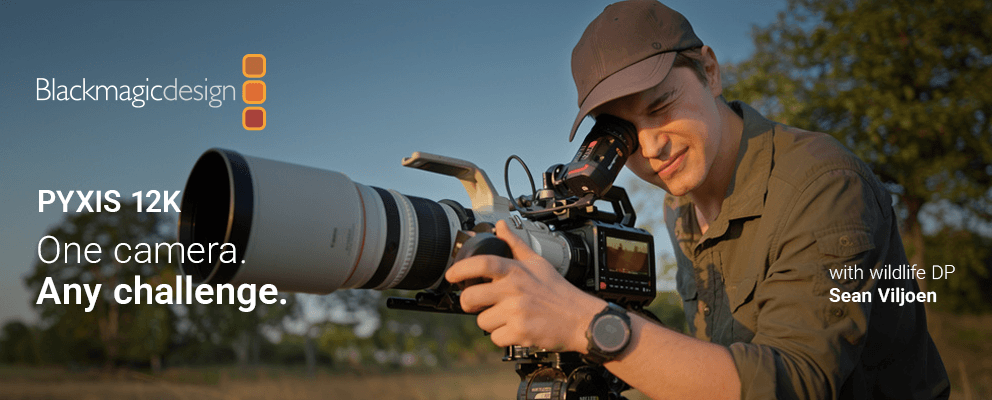
Für Wildlife-DP und Regisseur Sean Viljoen ist das mehr als eine Berufsbeschreibung. Gemeinsam mit seinem Team von der Conservation Film Company ist er mit kleinen Crews an abgelegenen Drehorten unterwegs und erzählt die Geschichten der Menschen, die ihr Leben dem Naturschutz widmen.
Solche Produktionen lassen sich nicht planen wie ein Studio-Dreh. Wetter, Gelände und das Verhalten der Tiere entscheiden, was an einem Drehtag möglich ist – und die Ausrüstung muss mithalten, ohne den Ablauf zu verkomplizieren. Genau hier setzt die Blackmagic PYXIS 12K an: Für Sean ist sie zur „Everything Camera“ geworden – ein Kamera-Body für lange Tele-Setups, mobile Dokumentarszenen und Interviews, oft alle am selben Tag.
Bei unseren Hands-on-Events kannst du die PYXIS 12K selbst testen und mehr über die Kamera im Wildlife-Einsatz und darüber hinaus erfahren.
KOSTENFREI ZUR PYXIS 12K ROADSHOW ANMELDENEine Kamera, viele Setups
„Was die PYXIS 12K für mich wirklich freigeschaltet hat, ist ein kompaktes Long-Lens-Setup.“ – Sean Viljoen
Mit einem langen Teleobjektiv wie dem Sigma 150–600 mm passt das komplette Setup in einen Rucksack und lässt sich auch auf abgelegenem Terrain tragen, bei voller Cinema-Bildqualität. Am selben Tag baut Sean die Kamera für ein klassisches Wildlife-Setup auf oder rüstet sie für Interviews und mobile Dokumentarszenen um – Situationen, für die er früher mehrere Kamerabodies gebraucht hätte.
Das Ergebnis: ein Kamerasystem, das sich an den Drehtag anpasst – nicht umgekehrt.
Ein Cinema-Sensor mit echter Flexibilität
Im Zentrum der PYXIS 12K steht ein waschechter Cinema-Sensor: 12K RGBW-Auflösung, 16 Blendenstufen Dynamikumfang und Aufzeichnung in Blackmagic RAW. Entscheidend ist das sensorinterne Scaling: Du nimmst in 12K, 8K oder 4K auf, ohne dafür beim Wechsel der Auflösung in den Sensor zu croppen.
„Mit der PYXIS arbeitest du im Vollformat immer von derselben Sensorfläche aus.“ – Sean Viljoen
Bei den meisten Kameras verändert ein Wechsel auf niedrigere Auflösung den Bildwinkel und zwingt zur Neuberechnung des Framings. Bei der PYXIS 12K bleibt diese Fläche erhalten – ein klarer Vorteil an Tagen, an denen zwischen Auflösungen gewechselt wird, ohne jedes Mal neu zu framen.

9K Super 35 für zusätzliche Reichweite
Für Wildlife-Aufnahmen hat sich für Sean besonders der 9K-Super-35-Modus bewährt: ein engerer Bildausschnitt bei gleicher Brennweite und weiterhin hoher Auflösung – der Sweet Spot aus Datenmenge, Sensor-Readout und Postproduction-Workflow.
16 Blendenstufen: Reserven, wenn das Licht keine zweite Chance gibt
Bei Wildlife-Drehs lässt sich das Licht selten kontrollieren. Der Dynamikumfang macht sich im Feld am stärksten bemerkbar:
„Die Menge an Bildinformation, die man aus Bereichen zurückholen kann, die sonst komplett ausgebrannt wären, ist wirklich unglaublich.“
Sean Viljoen · Wildlife-DP & Regisseur, Conservation Film Company
Dieser Spielraum rettet Aufnahmen, die sonst unbrauchbar gewesen wären.

Pre-Record: Der Moment ist schon im Kasten, bevor du drückst
Die PYXIS 12K verfügt über eine Pre-Record-Funktion – für die Wildlife-Filmerei ein entscheidender Vorteil.
„Das spart enorm viel Material, weil du nicht die ganze Zeit auf den Moment wartest.“ – Sean Viljoen
Statt durchgehend aufzunehmen und auf den richtigen Moment zu warten, spart das Team Speicherplatz und fängt trotzdem Momente ein, die sonst verpasst worden wären.
Workflow: Vom Set direkt in den Schnitt
Aufgezeichnet wird in Blackmagic RAW, dazu lassen sich Proxys direkt aus der Kamera in die Cloud hochladen – per Ethernet oder über die Mobilfunkverbindung eines angeschlossenen Smartphones. In Kombination mit Starlink kommuniziert Seans Team so bereits während des Drehs mit der Schnittabteilung, ohne auf die Rückkehr ins Studio zu warten.
Von der Story zur eigenen Praxis
Was im Film sichtbar wird, lässt sich am besten selbst erleben.
Das Wichtigste auf einen Blick
PYXIS 12K – Eine Kamera. Jede Umgebung.
12K RGBW. 16 Blendenstufen Dynamikumfang. 9K Super 35. Pre-Record. Kompaktes, modulares Design.
Für kurze Zeit sparst du bis zu 16 % auf ausgewählte Varianten der Blackmagic PYXIS 12K.
Die Rabatte sind bereits im Preis berücksichtigt.
Das Wichtigste auf einen Blick
PYXIS 12K – Eine Kamera. Jede Umgebung.
12K RGBW. 16 Blendenstufen Dynamikumfang. 9K Super 35. Pre-Record. Kompaktes, modulares Design.
Für kurze Zeit sparst du bis zu 25 % auf ausgewählte Varianten der Blackmagic PYXIS 12K.
Die Rabatte sind bereits im Preis berücksichtigt.


PYXIS 12K – Eine Kamera. Jede Umgebung.
„Unsere Arbeit bewegt sich an der Schnittstelle von Wildlife, Naturschutz und cineastischem Erzählen.“
Sean Viljoen · Wildlife-DP & Regisseur, Conservation Film Company
Für Wildlife-DP und Regisseur Sean Viljoen ist das mehr als eine Berufsbeschreibung. Gemeinsam mit seinem Team von der Conservation Film Company ist er mit kleinen Crews an abgelegenen Drehorten unterwegs und erzählt die Geschichten der Menschen, die ihr Leben dem Naturschutz widmen.
Solche Produktionen lassen sich nicht planen wie ein Studio-Dreh. Wetter, Gelände und das Verhalten der Tiere entscheiden, was an einem Drehtag möglich ist – und die Ausrüstung muss mithalten, ohne den Ablauf zu verkomplizieren. Genau hier setzt die Blackmagic PYXIS 12K an: Für Sean ist sie zur „Everything Camera“ geworden – ein Kamera-Body für lange Tele-Setups, mobile Dokumentarszenen und Interviews, oft alle am selben Tag.
„Unsere Arbeit bewegt sich an der Schnittstelle von Wildlife, Naturschutz und cineastischem Erzählen.“
Sean Viljoen · Wildlife-DP & Regisseur, Conservation Film Company